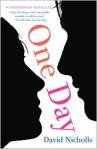
 I have an issue with books that touch on subjects close to me, fiction or nonfiction.
Maybe it's two issues:
I have an issue with books that touch on subjects close to me, fiction or nonfiction.
Maybe it's two issues:
1) They get it wrong, which is irritating on all kinds of levels -- it's kind of like when some out-of-town journalist comes in and writes about your place and those little details that aren't quite right drive you nuts.
Or, 2) They get it right, which is even more uncomfortable and reminds me of my own weaknesses, or things I should have done, or places and people I miss. For these reasons I haven't been able to bring myself to read The Last Resort, Alison Lurie's novel set in Key West. That one will be resolved soon; the novel is the next choice for the library's One Island, One Book program so I will read it, dammit. I also have not read Home Town by Tracy Kidder, which is about Northampton, Massachusetts. Northampton is not, strictly speaking, my hometown although I was born there, but I grew up close by, knew it my whole life and worked there as a newspaper reporter one summer. I had my feet measured at Ted's Boot Shop. I remember when the main street had a hardware store, not a bunch of ice cream shops and trendy boutiques. I know that if you're really from there and not some Smithie/yuppie transplant you call it Hamp, not Noho. Kidder has lived in the region for many years and is a wonderful reporter and writer; there's no reason to fear he's going to get it wrong. I'm more afraid with this one that it will make me question my choice to live my adult life so far from home. This is not the most rational of approaches.
So a couple weeks ago when I started reading reviews of a novel called One Day by David Nicholls I felt a combination of anticipation and dread. Anticipation because this novel was about two people almost exactly my age (they graduate from college in 1988; I graduated in 1989), following their lives connecting and not connecting for the next 20 years. It had a strong endorsement from Nick Hornby, so I knew it was likely to be a highly readable, probably funny novel. But I also knew that even though it is British it might strike uncomfortably close to home.
I ordered it from the library anyway -- there just haven't been that many novels that are so exactly on point for Generation X -- and on just about all counts, I was right. It is highly readable, it is in many ways quite funny and it strikes way too close to home, especially the female lead, Emma Morley. She's smart, an aspiring writer who wants to do good in the world but is insecure about competing with self-promoting media types. The male lead, Dexter Mayhew, did not remind me of me but he reminded me of a few guys I have known and been fond of, even when they behaved badly. He's goodlooking, confident and comes from money, all of which means while Emma is toiling away in a crappy Mexican restaurant then starts teaching at a comprehensive (public in the American sense) high school, Dexter is traveling in Italy and India, then effortlessly launching into a career as a TV host of silly pop culture shows. It doesn't mean he's any happier than Emma, just more commercially successful. And to a few people -- like Emma -- Dexter reveals his own insecurities and his own capacity for kindness and generosity. Even while he is also behaving very very badly.
BIG SPOILER ALERT HERE -- I'M ABOUT TO START TALKING ABOUT KEY PLOT POINTS SO IF YOU WANT TO READ THIS BOOK AND DON'T WANT TO KNOW, STOP READING RIGHT NOW!!!!
Still here? So ... when I finished this novel, I felt upset. Really upset. I was curious about whether Dexter and Emma would ever get together -- they do, of course -- but I suspected Nicholls was going to pull the rug out from under me in some fashion. I was not expecting him to go and kill off one of the protagonists. Naturally, it was Emma, the one I really identified with. So I was upset that Emma died, I was upset that poor Dexter, after finally getting his act together and recognizing the good woman in front of him, was griefstricken ... and I was upset with myself for being so upset about people who are, after all, fictional characters.
What is up with that? I tell myself these people don't really exist, never existed -- but its gets to me far more than it should. Which is I suppose why we read fiction -- to enter another world, find out about other people, get a view into other people's lives and get into their heads the way you never could with a real person. When bad things happen to fictional characters, provided they are fictional characters I have emotionally invested in, it's far more upsetting than when I'm reading nonfiction where plenty of bad things happen to people. This doesn't really make sense -- after all, in nonfiction you're talking about real people who presumably really went through the terrible experience you're reading about. But with fiction you have collaborated in bringing the characters to life for the period of time you're reading about them. That's my excuse anyway. A book with a similar emotional residue was Maggie O'Farrell's "After You'd Gone" -- although that one was less of a shock because of, you know, the title. It's all enough to make me want to go running back to books where I know damned well the ending will be happy -- or possibly nonfiction, where I'm unlikely to get quite as caught up in the interior lives of others.
I'm giving One Day 4 stars -- it's very well done and I didn't mind the premise, in which Nicholls checks in on the characters on a single day each year. Some people have called it gimmicky, but it seemed like a fine structure and worked for a novel covering a 20-year timespan. The day is July 15, St. Swithin's Day, which has no significance for me but apparently the Billy Bragg song was a big inspiration. Give it a read, especially if you're a Gen Xer who's been hankering for some fiction that reflects the lives of our generation.

